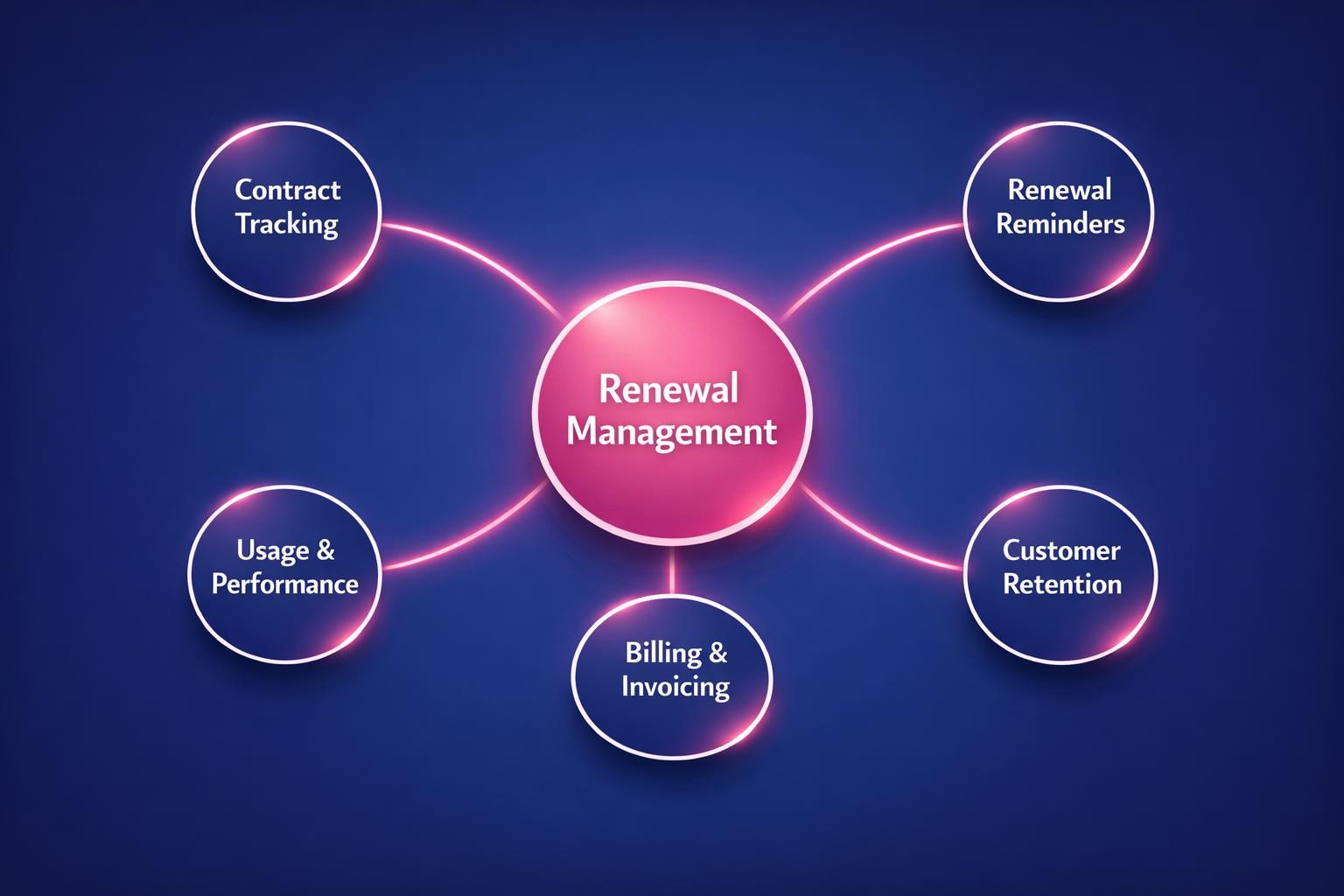
This guide uses “renewal management” in the broader revenue-process sense used by the source material: managing active B2B opportunities and relationships through documented stages, stakeholder engagement, measurement, coaching, and review. It does not claim that new-customer acquisition and existing-customer contract renewal are identical processes. Revenue leaders should adapt the framework to the motion they manage.
Build an Ongoing Operating Discipline
The sources frame Renewal Management as an ongoing system rather than a one-time event. A practical system brings together explicit ownership, documented workflows, manager reinforcement, technology and data, and recurring feedback.
The source framework starts with explicit strategy ownership. The process that governs renewal management B2B SaaS enterprise must be documented, taught, and enforced. The technology layer for Renewal Management should reduce friction, not add it.
Audit the Current State
Before you can improve Renewal Management, you need an honest baseline. Review recent opportunity data, map opportunities against the stages used by your team, and identify where progress stops. Separate the findings by rep, segment, and deal size instead of relying on a general narrative.
An operating model for Renewal Management answers three questions: what actions should happen, at what stage, and who is accountable. Document this explicitly.
Use a Focused Improvement Plan
Start with an honest audit. Use that assessment to prioritize two or three specific improvements that will have the biggest impact on revenue outcomes. Deploy them with a clear owner, a measurable goal, and a 90-day review cadence. Then build from there.
Define the Process, Coach Live Opportunities, and Review It Weekly
Write down exactly what excellent execution looks like at each stage of the deal, and hold every rep accountable to that standard.
Use deal-specific coaching by reviewing live opportunities with each rep, identifying exactly where execution breaks down, and working through the fix in real time.
For Renewal Management, leading indicators might include stakeholder engagement rates, content consumption, mutual action plan progression, or deal velocity at each stage. Build a standing review of Renewal Management health into the weekly rhythm as a structured conversation about what needs to change in the next 7 days.
Technology should serve the renewal management B2B SaaS enterprise process, not define it. Ensure your tools talk to each other so data flows without manual intervention.
Product resource: Revspire Customer Intelligence.
Avoid Common Execution Mistakes
Assign a permanent owner to Renewal Management outcomes. Build it into your operating cadence with standing review meetings, defined metrics, and quarterly improvement goals.
Define three to five leading indicators for Renewal Management and track them weekly. When reviewing active opportunities, do not confuse volume with movement: Measure outcomes, not activities. Track stage progression velocity, buyer engagement quality, and stakeholder coverage breadth.
Relationship coverage also matters. Map every stakeholder in the buying committee, assign coverage, and track engagement with each one. After a significant loss, use a structured review, document the findings, and update the playbook.
Make Continuous Improvement Routine
Capture insights deliberately through post-deal interviews, CRM data analysis, and structured win-loss reviews, then feed them back into playbooks, training, and strategy. Review Renewal Management metrics quarterly against targets, update playbooks when you learn something new, and solicit feedback from buyers on their experience.
Leave a Reply