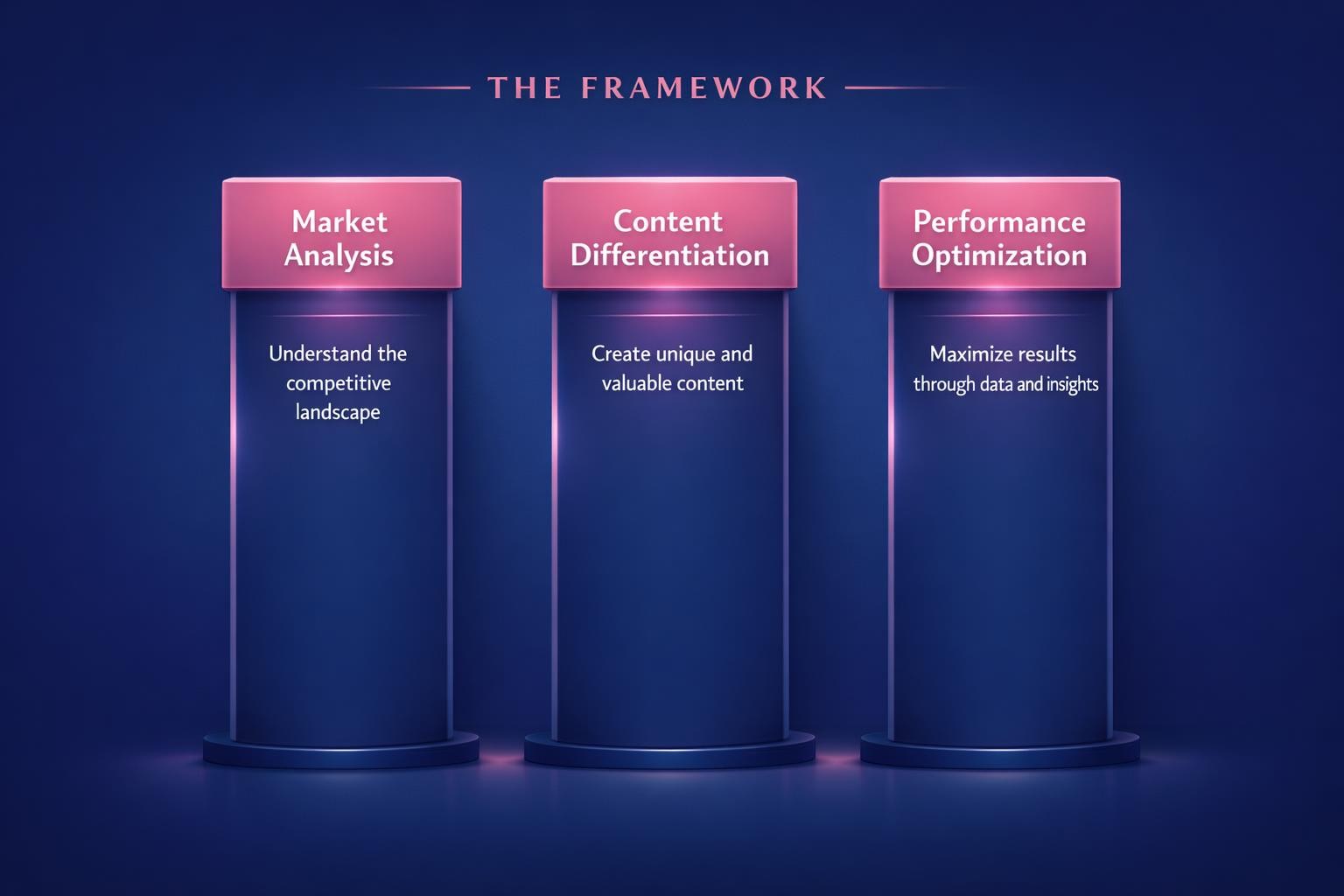
Competitive content strategy should be treated as an ongoing operational discipline, not a project with a start and end date. Revenue teams can strengthen the discipline by assigning ownership, defining measurable standards, reviewing buyer and deal signals, and applying lessons from wins and losses.
Five competitive content strategy mistakes
1. Treating the work as a one-time initiative
A temporary project can lose momentum when daily pipeline pressure takes over. Assign a permanent owner to Competitive Content Strategy outcomes. Build the work into a standing operating cadence with defined metrics and quarterly improvement goals.
2. Relying on intuition instead of data
Recent or memorable deals can distort decisions about the wider portfolio. Define three to five leading indicators and track them weekly. Relevant indicators can include stakeholder engagement, content consumption, mutual action plan progress, and deal velocity.
3. Depending on one stakeholder
Map every stakeholder in the buying committee, assign coverage, and track engagement with each one. Deals with only one active contact should receive additional scrutiny.
4. Confusing activity with progress
Measure outcomes, not activities. Track stage progression, buyer engagement quality, and stakeholder coverage. When activity is high but outcomes are poor, investigate what is happening inside the deal instead of requesting more activity.
5. Failing to learn from losses
Implement a structured loss review process. Document the specific breakdowns that contributed to significant losses and update playbooks accordingly.
Build a practical operating model

Establish a baseline
Pull the last six months of deal data. Map opportunities by stage, representative, segment, and deal size, then identify where deals exit or stall.
Define actions and accountability
An operating model for Competitive Content Strategy answers three questions: what actions should happen, at what stage, and who is accountable. Document the model and keep it simple enough for the team to follow.
Measure leading and lagging indicators
Leading indicators can provide time to intervene before a deal closes. Lagging indicators such as win rate, cycle time, and average deal size show what happened. Build a dashboard that shows both. Review it weekly.
Seven practices for continuous improvement

- Define strong execution. Write down what excellent execution looks like at each deal stage.
- Instrument each stage. Monitor leading indicators that can reveal where intervention is needed.
- Use a weekly cadence. Discuss what needs to change in the next seven days to improve outcomes.
- Coach with live opportunities. Review active deals and work through specific execution gaps with each representative.
- Capture win-loss intelligence systematically. Use post-deal interviews, CRM analysis, and structured reviews to update playbooks and training.
- Align technology with the process. Evaluate whether each tool reduces friction and supports consistent execution.
- Create feedback loops. Review metrics against targets, update playbooks when the team learns something new, and request buyer feedback.
Choose where to start

Start with an honest audit. Compare what the data says with the team’s narrative, then identify two or three specific improvements. Deploy them with a clear owner, a measurable goal, and a 90-day review cadence.
A durable approach combines explicit ownership, documented workflows, connected data, measurement, coaching, and continuous learning.
See how Revspire helps B2B revenue teams eliminate these patterns
Leave a Reply