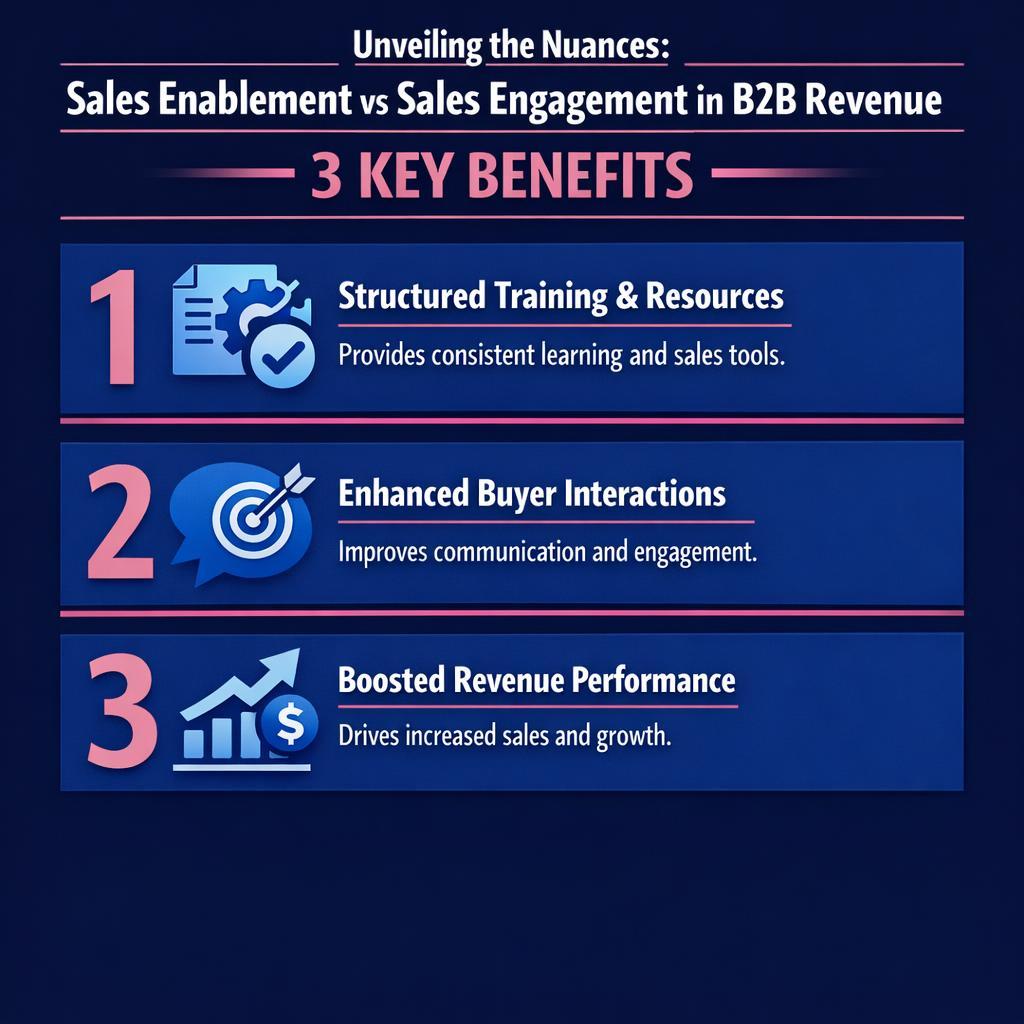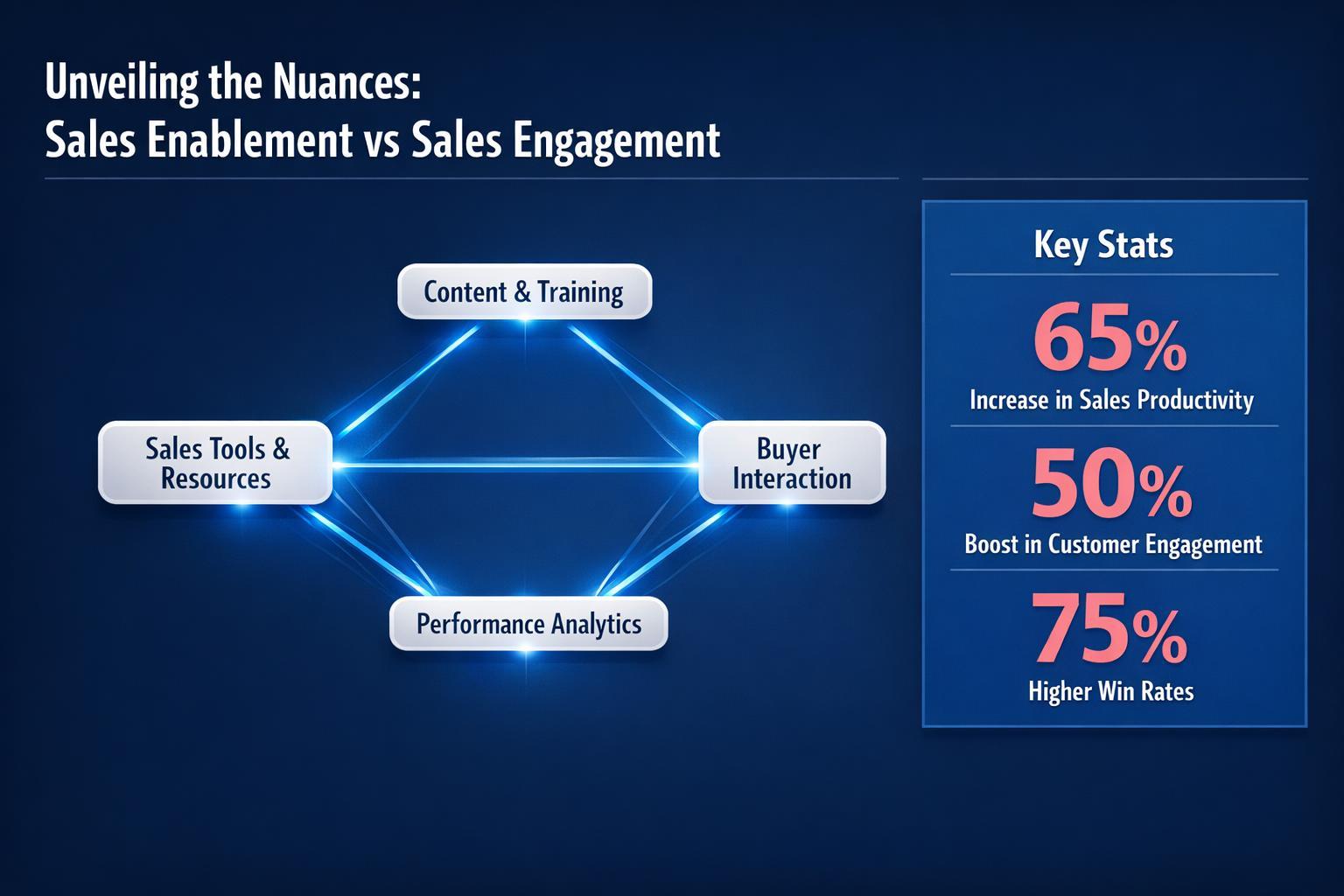
Sales enablement vs sales engagement: the short answer
Sales enablement prepares sellers to perform. It provides content, training, coaching, playbooks, and guidance. Sales engagement helps sellers execute and measure interactions with prospects and customers through cadences, channels, prioritization, and activity workflows.
The two capabilities are complementary: enablement defines and teaches effective behavior; engagement helps representatives apply that behavior consistently in market.
| Dimension | Sales enablement | Sales engagement |
|---|---|---|
| Primary purpose | Improve seller readiness and execution quality | Plan, execute, and measure buyer interactions |
| Core workflows | Onboarding, training, coaching, content, and playbooks | Cadences, calls, emails, tasks, routing, and follow-up |
| Primary users | Enablement leaders, managers, and sellers | SDRs, account executives, managers, and revenue operations |
| Main outputs | Approved guidance and demonstrated proficiency | Consistent outreach and documented interaction history |
| Typical measures | Ramp, proficiency, adoption, content use, and conversion | Response, meeting, progression, and workflow-completion rates |
| Common failure | Resources exist but are not used in live work | Activity scales without relevant messaging or buyer progress |
What is sales enablement?
Sales enablement equips sellers with the knowledge and resources needed to execute the sales process. It commonly includes:
- Content and guidance: approved messaging, playbooks, case studies, and competitive guidance.
- Training and onboarding: role-specific learning, practice, certification, and reinforcement.
- Coaching: manager workflows that connect observed behavior to focused improvement.
- Technology and governance: systems that make current resources findable, usable, measurable, and owned.
What is sales engagement?
Sales engagement organizes how sellers communicate with prospects and customers across channels and stages. It commonly includes:
- Cadences and tasks: repeatable sequences for outreach and follow-up.
- Channels: approved email, phone, social, video, and meeting workflows.
- Prioritization: rules and signals that help representatives decide where to act.
- Interaction data: activity and response history used to review execution and buyer progression.
How sales enablement and sales engagement work together
Sales enablement supplies the message, knowledge, skills, and coaching standard. Sales engagement activates those inputs through buyer-facing workflows. Connecting the two helps a team avoid both unused enablement resources and high-volume activity without relevant guidance.
Example: turning an objection into a governed workflow
- Enablement documents the approved response, evidence, and escalation path for a recurring objection.
- Training and coaching help the representative diagnose the objection before using the response.
- The engagement workflow makes the guidance available during the relevant follow-up task.
- Managers review response and progression evidence, then send useful findings back to the enablement owner.
Questions to ask before buying another platform
- Is the current problem missing knowledge, weak practice, inconsistent execution, or insufficient activity visibility?
- Which system owns approved content and which owns buyer-interaction history?
- Can a representative move from guidance to action without duplicating data?
- Who reviews messaging, cadence, permissions, retention, and measurement?