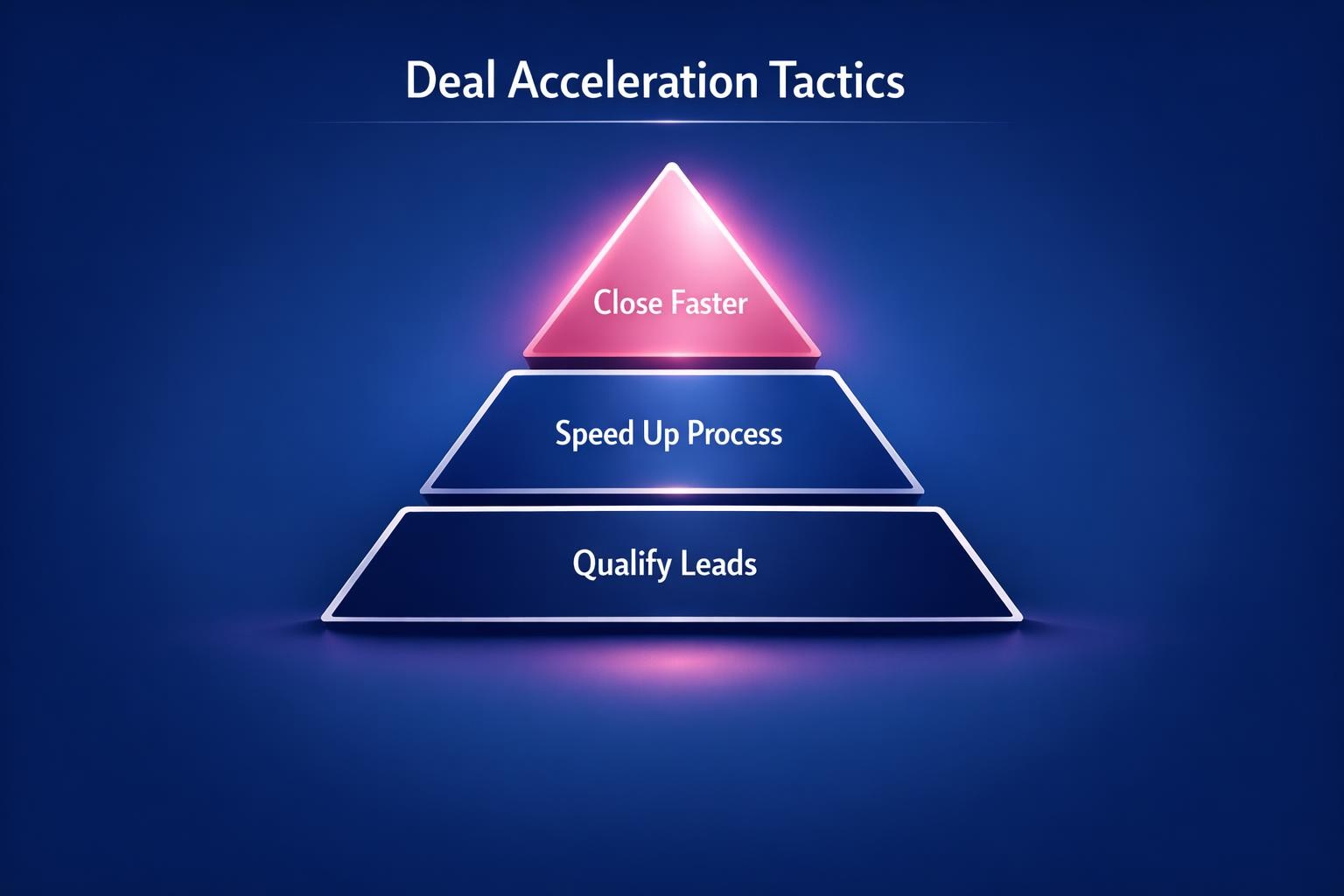
Deal acceleration tactics should be managed as an ongoing operational discipline rather than a project with a fixed end date. A practical system brings together ownership, documented stage expectations, meaningful measures, live-deal coaching, and a feedback loop.
Define ownership and execution standards
Begin with three operating-model questions: what actions should happen, at what stage, and who is accountable. Write down what excellent execution looks like at each stage of the deal so representatives and managers can apply consistent expectations.

Audit the current process
Establish a baseline by mapping opportunities against pipeline stages and identifying where deals leave the pipeline. Review the results by representative, segment, and deal size. Compare what the data says with the team narrative, then prioritize two or three specific improvements.
Use leading and lagging indicators
The right metrics for Deal Acceleration Tactics sit at the intersection of leading and lagging indicators. Calls, emails, and tasks can remain high while a pipeline does not move. Review stakeholder engagement, mutual action plan progression, and deal velocity with lagging indicators such as win rate and cycle time.
Strengthen stakeholder coverage
Building the relationship around a single stakeholder creates risk. When that person disengages, changes roles, or leaves the company, the team may have no fallback. Map relevant stakeholders, assign coverage, and track engagement with each one.

Coach with live opportunities
Use deal-specific coaching to review live opportunities with each representative, identify where execution breaks down, and work through the fix in real time. Include this review in the weekly operating cadence so problems can be addressed while opportunities remain active.

Create a repeatable feedback loop
Capture findings through post-deal interviews, CRM data analysis, structured win-loss reviews, and buyer feedback. Feed what the team learns back into playbooks, training, coaching, and strategy. Technology should support the deal acceleration process rather than define it.

Put the system into practice
- Assign a permanent owner.
- Document stage actions and execution standards.
- Audit where opportunities stall or leave the pipeline.
- Track leading and lagging indicators.
- Review live deals and stakeholder coverage each week.
- Update playbooks when deal evidence supports a change.
Explore the Revspire Deal Room page for more information. Talk to Revspire about your revenue workflow.
Leave a Reply