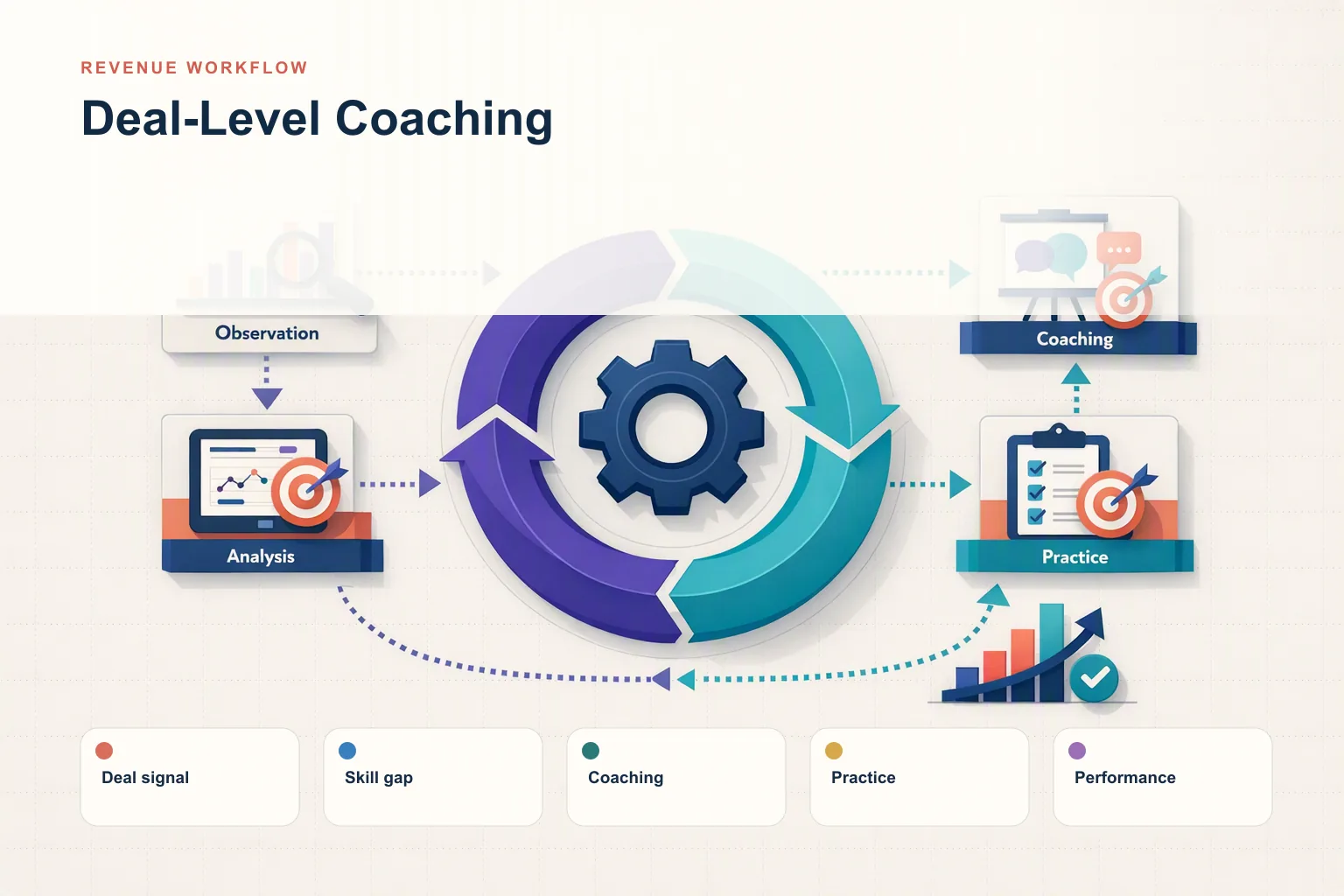
This guide presents a practical framework for defining, operating, and measuring deal-level coaching across a B2B revenue team.
Treat Deal-Level Coaching as an ongoing operational discipline. Assign a permanent owner, establish review meetings, define metrics, and set quarterly improvement goals.
Define the Deal-Level Coaching System
Document clear milestones, criteria, and a shared vocabulary for each stage of the deal.
An operating model for Deal-Level Coaching answers three questions: what actions should happen, at what stage, and who is accountable.
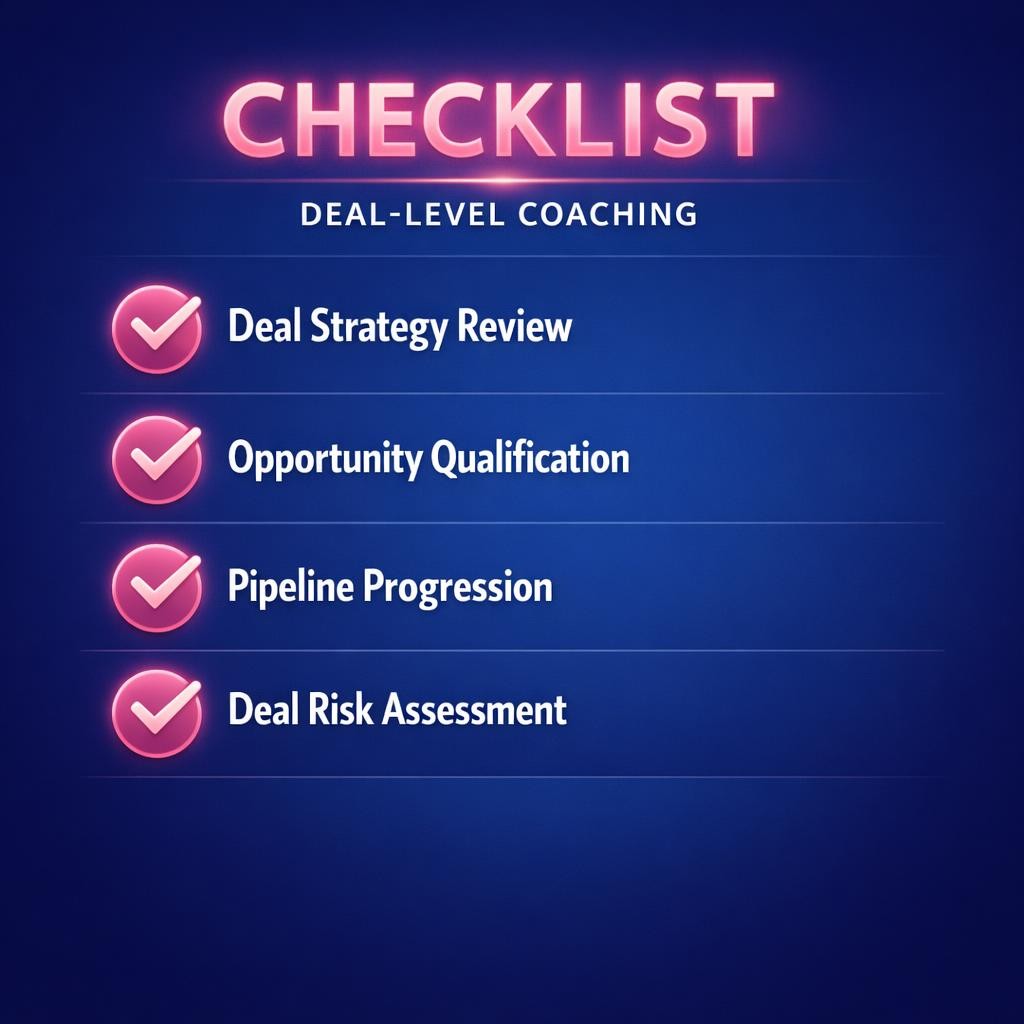
Audit the Current State
Start with an honest audit.
Review recent deal data, map opportunities against the current stages, and identify where deals fall out or stall. Break the findings down by representative, segment, and deal size when those distinctions are useful.
Compare what the data shows with the team’s current narrative. Use the assessment to prioritize a small number of specific improvements, each with a clear owner and measurable goal.
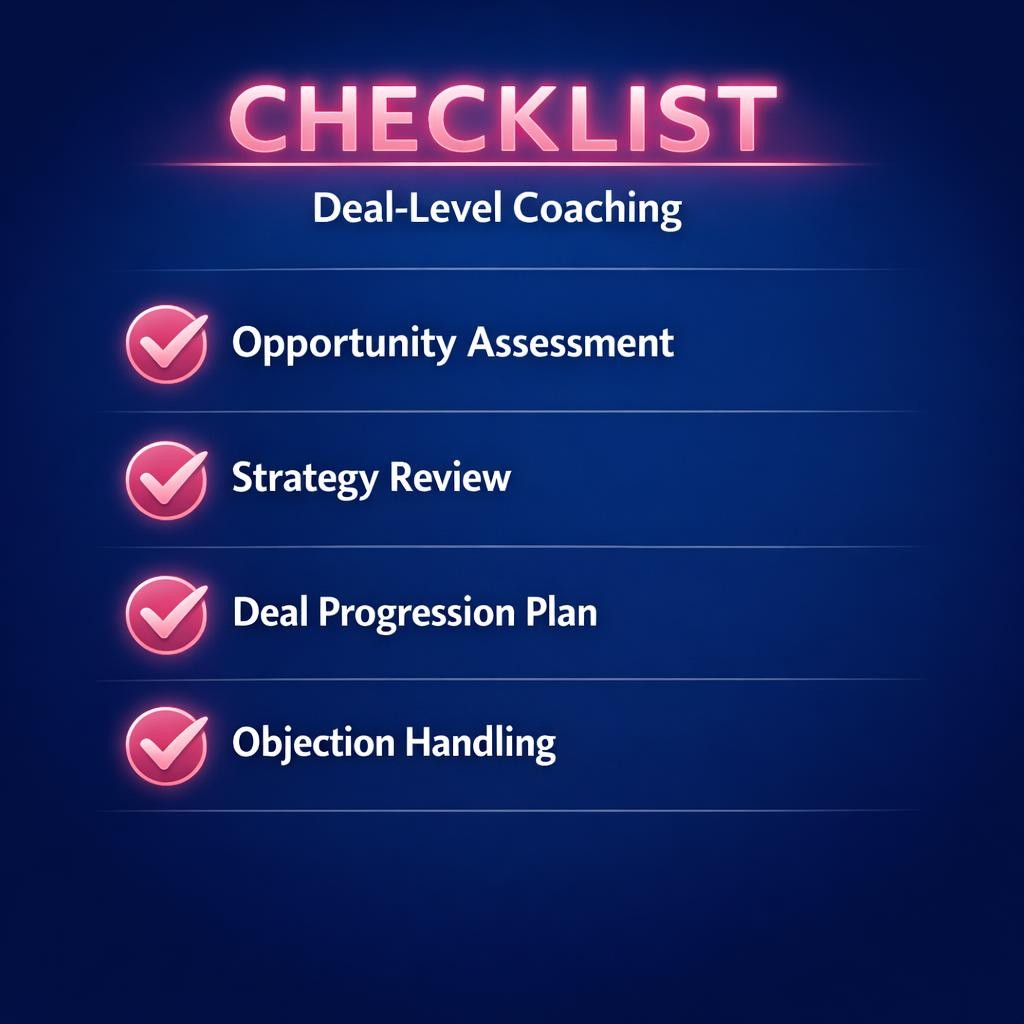
Build Coaching Into the Workflow
Review live opportunities
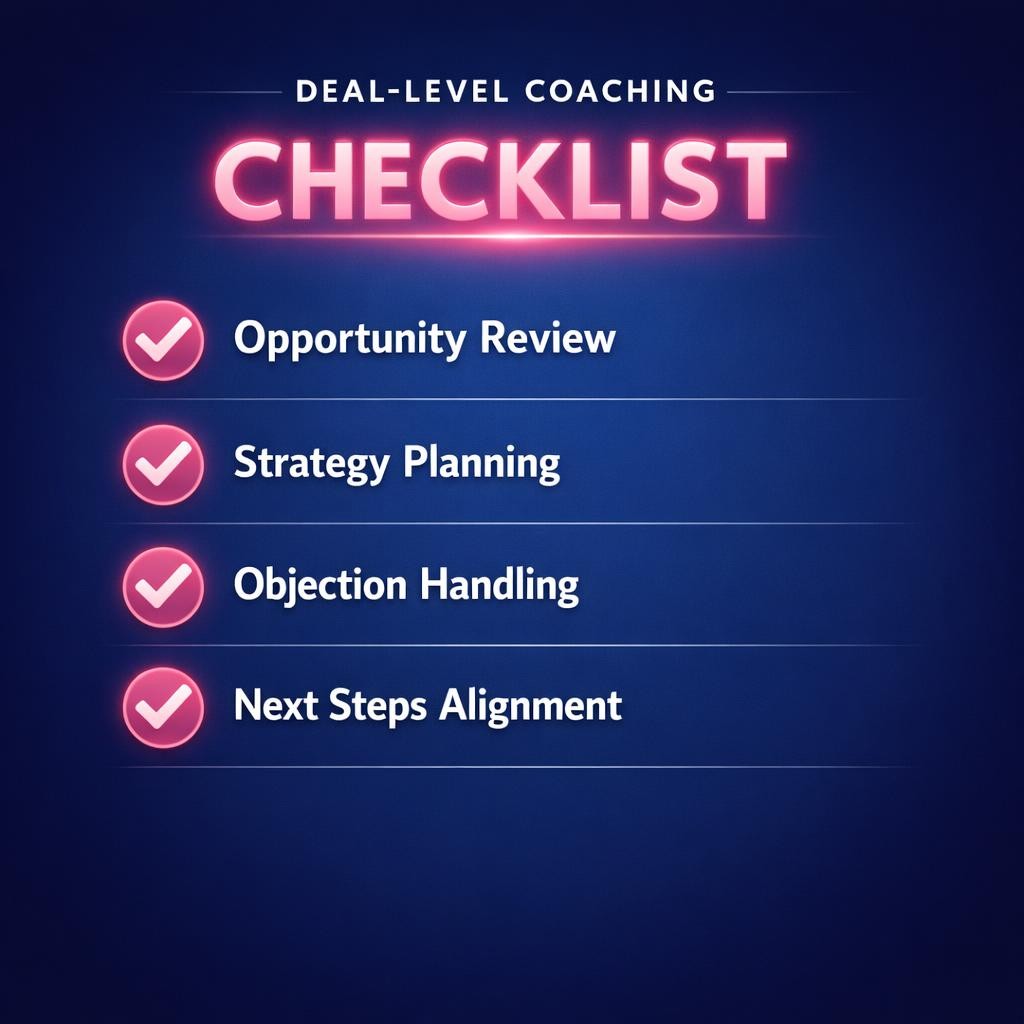
Use live opportunities for deal-specific coaching. Review each opportunity with the representative, identify where execution is breaking down, and work through the next action.
Establish a weekly cadence
Include a structured Deal-Level Coaching review in the weekly pipeline call. Focus the conversation on what needs to change during the next seven days rather than limiting the meeting to a status update.
Keep the pipeline call and the developmental conversation distinct. Use the one-on-one sales coaching agenda, questions, and follow-up plan for the selected issue, moving from evidence to one observable behavior without turning coaching into deal inspection.
Align technology with the process
Technology should serve the deal level sales coaching pipeline process, not define it.
Evaluate each tool by asking whether it makes Deal-Level Coaching easier and more consistent or adds friction. Where possible, allow data to flow between the CRM, engagement platform, and deal room without repeated manual updates.
Explore Revspire Sales Coaching.
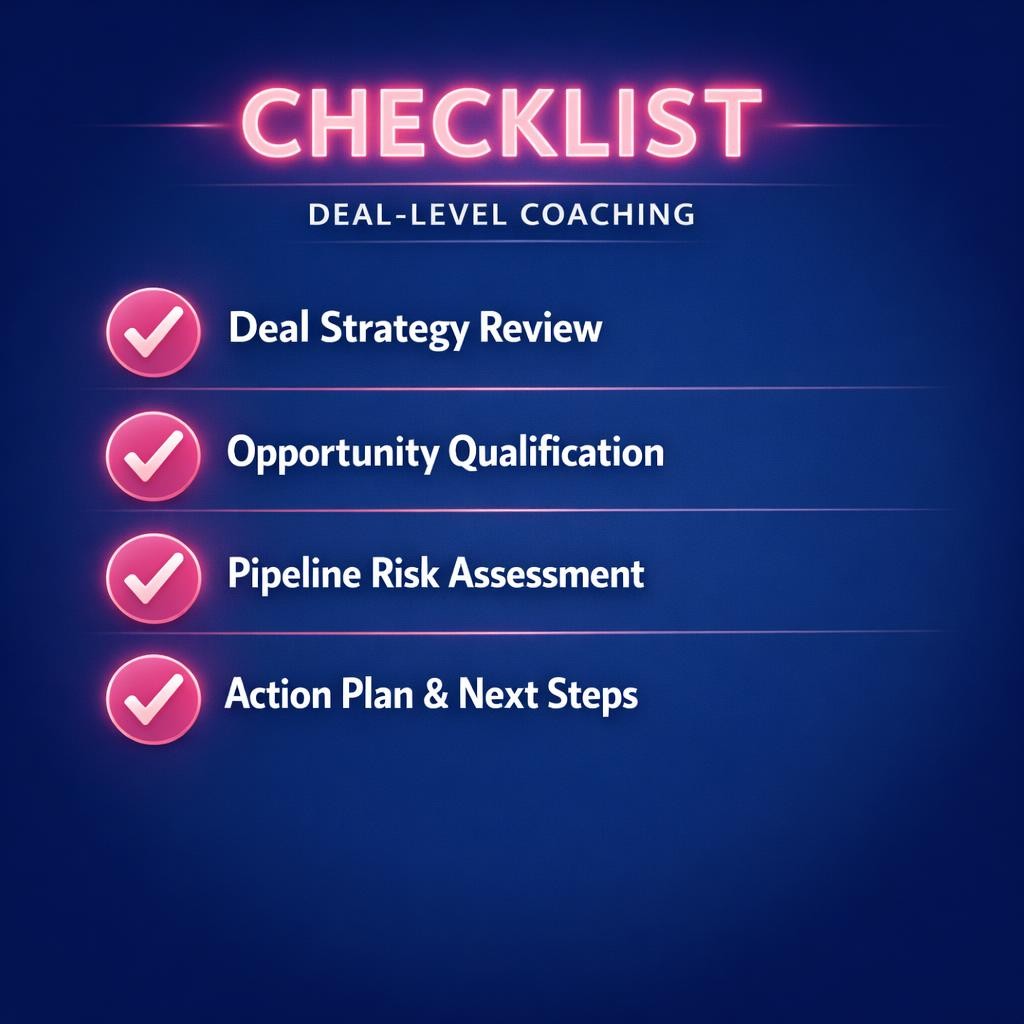
Measure Progress
Use lagging metrics such as win rate and quota attainment to review outcomes. Pair them with leading indicators such as stakeholder engagement rates, content consumption, mutual action plan progression, and deal velocity.
Measure outcomes, not activities.
Track stage progression velocity, buyer engagement quality, and stakeholder coverage breadth. When activity is high but outcomes are poor, investigate what is happening inside the deal instead of simply requesting more activity.
Build a dashboard that includes leading and lagging indicators, review it weekly, and connect it directly to coaching conversations and territory reviews.
Avoid Common Coaching Mistakes
Treating coaching as a temporary initiative
Keep the program running through permanent ownership, standing reviews, defined metrics, and quarterly improvement goals.
Relying only on intuition
Define three to five leading indicators and track them weekly. Investigate discrepancies when the data and the team’s assumptions do not agree.
Depending on one stakeholder
Map the buying committee, assign stakeholder coverage, and track engagement with each person. Flag deals where only one contact is active.
Failing to learn from losses
Use a structured loss-review process for significant lost deals. Analyze the specific breakdowns, document the findings, and update playbooks accordingly.
Create a Continuous Improvement Loop
Capture lessons from won and lost deals through post-deal interviews, CRM data analysis, and structured win-loss reviews. Feed those lessons back into playbooks, training, and strategy.
Review Deal-Level Coaching metrics quarterly against targets, update playbooks when new patterns emerge, and gather buyer feedback about the experience.
Leave a Reply